So, I had a great time at LTUE!
I did all right on my four panels, which was a relief, since this was my first time. I also made a bunch of friends and got to eat chicken salad croissants for three days, and I attended some very informative and interesting panels. My favorites might have been the one on Irish Mythology and the one about murder statistics.
I have varied interests. I'm a writer.
Anyway, I have a lot of good notes for my future writing, which is what I needed, because I have at least one antagonist I need to fully understand soon, since their stories need to be foreshadowed and all that. It was a good weekend, but a busy one, so on Sunday I relaxed by watching The Hunchback of Notre Dame again.
As I watched, maybe it was because it was Sunday and I've been doing a study of the New Testament, but I was struck by the way the film handles religion.
There's no way Disney couldn't discuss religion to some degree in this film. Heck, the cathedral is pretty much a character! But what I like is that they made religion a more universal trait, which makes sense for Catholic medieval France, and had many characters who held some kind of faith, and acted on it differently. That allows religion as a whole to be commented on but not praised or condemned, and allows characters to not be a stand-in for the ideas present in the film.
This can be linked to having multiple female or minority characters; when you have only one, they become the representative for everyone like them. If the film only had Frollo express religious faith, he would have become the film's only voice on the subject, but he's not.
For starters, let's look at the characters who use religion positively through the film. There's the archdeacon, the priest who stops Frollo from killing baby Quasimodo and actively tries to help and guide as he can.
He's not the most active character in the film, but whenever he appears, he does move to prevent bloodshed and to assert faith and hope. I'm thinking not only of his first appearance, the one I mentioned, but also when he's advising Esmeralda. The archdeacon comes across as kind and fatherly, more a mentor figure for the characters.
(Which makes me wonder if he, off-screen, did a little more than we realize in teaching and raising Quasimodo while he lived in the cathedral.)
So let's talk about Quasimodo next. Through songs like "Heaven's Light," especially, we see a simple childlike faith in Quasi. We don't get much religious diction from him, but what we do get is gentle and optimistic, seeing the good in others and in the world.
Speaking of songs, we can't ignore "God Help the Outcasts," which brings me to Esmeralda. Her faith is shown as young, not very knowledgeable, but very selfless, as she prays for those who are needy (juxtaposed with the other worshippers who pray for themselves).
A common thread I see in all these positive examples of religion in the film is a turning outward. The archdeacon, Quasimodo, and Esmeralda care more about others than about themselves. I would think that they seek more to live their faith through actions than through words, which might be why we have so little religious diction from any of them. These characters live in ways that would be accepted by a Christian faith: they are generous, forgiving, protective, and loving.
Now let's talk about Frollo. All he ever does is talk about religion; his speech is loaded with it.
However, he's the negative example because he's turned inward. In the first song, Clopin sings, about Frollo, "He saw corruption everywhere except within," which may suggest he's too turned outward, but when Frollo himself sings "Hellfire," he starts by telling the Virgin Mary that he's "a righteous man" and "so much purer than the common, vulgar, weak, licentious crowd."
Frollo is a character who is cruel and does not act in a Christian way. He has turned inward on himself, thinking only of how good and righteous he is while looking away and despising others. Since I've been reading the New Testament, I'd classify him a Pharisaical hypocrite, someone who uses his religiosity for power and self-affirmation, not to help and lift others.
Which leads him, to when he feels lust for Esmeralda, to refuse the responsibility of changing himself (after all, he's perfect and righteous in his own mind) and instead blames her for the effect.
This movie continues to be one of my favorite Disney films because of how well they make a statement about living one's faith versus speaking it, and one religion turned outward versus inward, without praising or condemning religion as a whole. I also love how its discussion is still topical today, in the way Frollo's self-satisfaction in his own "goodness" leads him to hatred and blaming others for his own sins, instead of helping those who need help.
I don't know what you would compare this to in today's age. In the polarized world we live in, I can imagine that perhaps people on all sides of debates might be the positive or negative examples of conviction that The Hunchback of Notre Dame shows us. When someone's spoken belief no long matches what they do, when they preach love and tolerance but behave with hate, no matter what their religious beliefs or political line in the sand, they've become a Frollo, haven't they? And shouldn't we all seek to be more like the archdeacon, Quasimodo, and Esmeralda and live an outward-reaching life? Are we really as good as we think we are, or can we be better?
All this because the film didn't make one character representative of an entire idea.
I don't know if this post made any sense, but it was interesting for me to write. I'm game for discussion, or any ideas for future posts you may want me to weigh in on.
Tuesday, February 19, 2019
Monday, February 11, 2019
"They're Fighting - That's How You Know They're in Love"
Hey! This week is LTUE!
It's finally here, from Thursday Feb. 14-Saturday Feb. 16! I'm excited, but also kind of nervous. I hope to see you there. Here's my specific schedule, of my panels, but I plan on being there all day, every day of the conference. It's a good one.
As you can see from the LTUE dates, this week is also Valentine's Day.
Which means that, hopefully, you will get treated or treat yourself, and I will treat all of you to a romantic(?) trope that I think can work really well, or be a sign of really lazy writing/fandom.
The "they fight all the time so they must have romantic chemistry" trope.
As someone who has a couple of characters who are known for fighting a lot, I hear about this trope a lot. Heck, as someone who is on the internet a lot, I hear about this trope a lot. It's everywhere, from Hallmark movies to people's ship wars online. Here's the thing: I think too often it's done poorly and allows for glorifying toxic relationships.
Let us begin. This trope is so popular in romances as a way of raising tension in the story. If there's nothing keeping the main characters apart, then there's not much of a story. However, if they meet and instantly find something about the other person that irritates them, or something they even loathe, then you can keep a wedge between them for longer, and draw out the tension.
I see nothing wrong with this as long as it's done believably. In fact, I think this can be an excellent way to show character and character growth. Say what you will about Hallmark movies, but they're pretty good at this: the flaws the characters find in each other that cause them to fight are often based on misunderstandings stemming from past experiences or personality traits, or end up revealing issues the characters need to resolve before they can achieve the happy ending.
For example, they fight because she thinks he's lazy and he thinks she's a snob, but what has happened is that he saw her brush someone off without knowing the context, and she is very hardworking, to a fault, and needs to learn to let more in her life (she's the main protagonist).
You've seen this movie, I'm sure, or many like it. This kind of fighting tends to get resolved as the characters learn more about themselves and each other, and grow as people. They see that what they thought was a big deal actually was just a misunderstanding or that it wasn't as important as the things they admire or have in common with the other person.
This is done well. What is not done well is when the story takes this trope at face value and decides that fighting=chemistry.
No. NO. NO. NO!
I want to illustrate this with a story from my own life. I came home from a group gathering angry because I'd gotten into an argument with a guy (this was a couple months ago before I starting dating my boyfriend). When I told my parents about it, they responded with amusement and told me, "If this was a movie, you'd end up falling for him."
Context? I was fighting with the guy because he was trying to convince me that black people who get shot by police deserve it and that it's okay to pay women less than men for the same job because their ability to get pregnant makes them a liability.
In short, I didn't like him and I found his views revolting. We disagreed on a very fundamental level. This was not a misunderstanding or a character flaw I had to "get over." If I did the fiction thing and took this as a sign of chemistry, I would have found myself in a toxic relationship.
And yet I see this happen sometimes in stories and TV and online writing. Writers want to show chemistry, so they show the characters fighting without paying attention to the traits or perspectives that would lead to the argument, and how those traits lead to a wholesome relationship later. Or, I see fans shipping relationships, say, "These characters fight all the time. You can smell the chemistry," without, again, considering why they're fighting and if, just maybe, the differences are a little too much here.
Tropes aren't inherently good or bad, but I think when they're handled lazily they can lead to some very bad things. Like glorifying fighting in relationships as a sign of chemistry, when most social science agrees that while couples fight, the ability to work through issues together is a better indicator of success, and also, people tend to prefer partners who are similar to them in background and views.
That's not universal, of course. But the point I'm trying to make is that when writing characters who clash, writers need to consider why they're clashing and how the romantic relationship leads to positive growth for both parties, not a future of consistent bickering. Unless you're trying to show an unhealthy relationship, then by all means, go for it.
So, this Valentine's Day, I wish you lots of love and lots of well-written love stories, full of positive conflict and devoid of unhealthy relationships. May I suggest The Lunar Chronicles by Marissa Meyer?
Monday, February 4, 2019
Satisfying Endings
Last week I had the chance to see the musical Wonderland at BYU.
It's a fairly recent musical; it premiered on Broadway in April 2011.
And closed a month later.
I can understand why. The music is very good, and the performers I saw had strong, excellent voices and acting chops. The musical does convey the sense of madness and danger that we associate with Wonderland. (It made me want to reread Heartless by Marissa Meyer.)
But the story was disappointing. There wasn't much of a narrative through the play, and the characters didn't seem to have much depth. Yeah, I know. It's a version of Alice in Wonderland, which one can argue doesn't have or need much of a narrative. I could have forgiven the lack of narrative except for...anyway, spoilers ahead.
The ending was a let down. The whole play is about an adult woman named Alice and how her life is essentially falling apart. Her daughter follows the White Rabbit into Wonderland and Alice follows, and while down there starts to remember the person she was as a child, becomes less selfish, etc. Not a bad idea. The Mad Hatter is female, and is the mirror image of Alice: the dark to her light, the evil to her good. She's the villain of this piece, and the story is supposed to end when Alice confronts and defeats her.
I was so ready for that ending. I could not wait for the showdown. It never came. Not really. They get ready for a chess battle, the Hatter kills the White Knight (the Wonderland version of Alice's husband), and while Alice mourns, the Queen of Hearts comes out and orders the game over and the Hatter's head removed. This happens as dictated.
Um, no? If the story is setting up for a literal and symbolic battle between Alice and her dark side, I want to freaking see it. I don't see an ending here where Alice has triumphed. It's like the live-action Beauty and the Beast - someone else took care of it for her. I don't feel a sense of completion.
See also the ending of the Twilight Saga. We are promised a battle we never get. Sure, characters learn and grow, but the narrative arc doesn't conclude and we're left feeling like we rode to the top of the first hill of a roller coaster, only to go no further. The rubber needs to actually hit the road. If the story has been about a character's growth, we need to see the character act in a new way that shows that growth. We need to see them face the problem that's been confronting them this whole time and come out on top, or at least fail trying.
I just read Empress of All Seasons by Emiko Jean.
This book gave me a good time. Excellent worldbuilding, and I loved reading a Japanese fantasy. The ending was satisfying in the way I just said: characters had to deal with the consequences of their actions, and the rubber had to hit the road. The characters in this book had to act on the growth they've had over the book, had to test themselves and show what they really cared for, all while the stakes were high, and I loved that.
The ending was a little disappointing, though, in other ways. While the story concluded, I felt like the author tried to shove too much character development, some of it unnecessary to the story, and too many themes and lessons into the end of the book. I felt a little preached to, in a weird and artificial way, which I didn't enjoy, but that's a post for another week.
The point is, endings are hard. I get it. But the ending is the final challenge not only for the writer but also for the characters. This is the moment when the readers see, in action, the way the characters have changed and grown. We see the stakes present and know this is the moment when the characters either win or don't. When the ending doesn't do this, the story fizzles. What has this whole book been building up to, anyway?
That's not something I want as a reader, and I sure don't want it as a writer. I want to leave my readers feeling like they just watched a fireworks finale: they know the story is over, but they're fully satisfied. Don't we all?
Monday, January 28, 2019
Embedded Stories
Hey! In a couple of weeks, I'm going to LTUE!
It's always a good conference; I've been going since I was an undergraduate. If you find yourself attending, or just in Provo during the weekend of February 14-16, find me and say hi!
This week, I don't have too much to report. It's life as usual, though it is a good life, and I'll keep you updated as the good things unfold. For one thing, I've already finished my taxes, and now no longer have to worry about that.
For another, I've been working on polishing and revising (not necessarily in that order) a work in progress. It's the fairy story, the YA Cinderella retelling I've mashed with a few other tropes and fairy tales, set in Vermont, and made the fairies the darker, amoral type over the Victorian kind.
It's so much fun, and I am in love with the world I set it in.
But here's the thing: creating a world based on ours, and adapting all the fairy folklore into a modern setting, means a lot of exposition. I have to explain to my readers what kind of fairies these are, what their rules are, etc., so that later, when my characters interact with the fairies, the readers understand what is happening.
I'm not sure how I'm doing so far, hence the revision.
Anyway, when I was drafting, I saw how much exposition I put in and how it made my story feel like a manual transmission car driven by someone who doesn't know how to drive manual transmission. It kept stopping the story, and I really didn't want that. I needed to give the background about the world and its rules without stopping the story.
Or, instead, making it okay to stop the story.
So I added more. More stories, that is.
One of my characters (who is a gosh-darn cinnamon roll who doesn't deserve ANY of the junk coming his way) is a storyteller. He was from the first draft. So instead of putting in exposition the old fashioned ways -- through narration or a character explaining -- I decided to put it in inside stories. When this character tells a story, I put it in the book, the whole story. What happens in the story teaches and models for my other characters what to do later.
I'm pretty happy with the effect. Of course, it means I get to write more stories, and I'm always a sucker for a good fairy tale, so of course I'd be happy.
But I'm hoping readers enjoy it too. A story has to be more entertaining to a reader than a block of exposition, right? Also, I know when I read The Thief by Megan Whalen Turner I really enjoy the myths and stories of her world. Actually, I got the idea for trying this from reading Turner's books.
If you haven't read this, you should. It's so very very well done.
Another thing that's fun about doing this is that I can shape the stories so that they not only give needed information but reveal things about the characters or parallel my main character's journey. They do so much more than simple exposition can, at least for my story.
Embedded stories also reveal a lot about the culture of the story's setting. I mean, I'm not using them this way as much, but think about ourselves. How many stories do you know? How do you know them? When I say "poison apple" or "glass slipper," do you know what I mean? How do we use stories to inform us about our own lives and situations, and how do we use them to convey morals or lessons to children?
Stories embedded in the larger story do slow down the pace. They change gears, and that may be jarring for people to read. Some readers may want the main story to progress in the time it takes to tell a story. So there is a little bit of a risk in trying this.
All I know that right now, when it's under my control, I'm going to attempt something new with this story and exchange exposition for embedded stories. I'm liking it better at this point.
What do you think? Do you like stories embedded inside a larger story, or not, and why? Do you think I should keep going with this experiment? Also, if you have any recommendations for books that do this, please tell me. Like I said, I kind of love stories and frame stories working together.
Monday, January 21, 2019
Magic With Integrity
How has your week been going? Mine was great!
One of the things I did was go give platelets, and when I do that, I watch a movie, and when I watch a movie while my blood cycles through a centrifuge, I tend to have deep thoughts. For example, I'm pretty sure I understand Big Fish now after watching it in the Red Cross office.
This time was no exception. But first, a word.
Did you know that Disney is planning a live-action Hunchback of Notre Dame movie???
DID YOU?
I'm pretty excited about that! I think it could be really good, since there's such a deviation between the Disney animated movie and the book by Victor Hugo (who really enjoyed killing off major characters) that the filmmakers have a lot of material to work with. Which means it's easier to get a movie that is different enough to justify its existence without feeling forced, fake, or stupid.
I found out because one of the phlebotomists commented on Josh Gad's role in the Hunchback movie when he showed up in the live-action Beauty and the Beast, which I chose over Venom because I do not do jump scares when needles are in my arms.
It's been a while since I saw Beauty and the Beast, at least the live-action one. I'd forgotten how beautiful it is, visually, and how much fun the "Gaston" scene is. I also forgot how annoyed I am at how diminished Belle's agency is in the film, and the enchantress scene at the end really bugged me, until I realized it was a moment of 1) diminished female protagonist power/agency and 2) an unfaithful magic system.
I really dislike that change in the live-action movie. A lot. Because magic doesn't work like that. At least, not in the terms set in the movie. If you haven't seen the movie yet, spoilers ahead. In the live-action version, Belle doesn't say "I love you" before the last petal falls. The curse takes full hold, and then she says it. Upon which the enchantress just undoes time and breaks the spell on her own.
No. No. Not happening. This is bad.
Why? Because it undermines the terms set by the curse. The Beast had until the last petal fell to break the spell. It happened, and the spell wasn't broken. Ergo, the magic terms had not been fulfilled, unlike in the animated version, in which they are just in the nick of time.
If the enchantress sets terms, why doesn't she live by them? Coming in to "close enough" the finale takes away all the urgency of the deadline and all the importance of the Beast and Belle managing the seemingly impossible task of falling in love. Why even bother setting up the stakes of the curse if it doesn't matter anyway?
I know that's putting it hard, but that's how it feels. All because the movie broke its own magic rules, therefore having a dishonest system. A magic system should have integrity and follow its own internal code.
Magic systems are hard. I'll admit that. You have to think of all the terms and implications of the magic used, and there are often holes discovered later (hence all the times J.K. Rowling needs to speak out after the fact on why the horcrux in Harry wasn't destroyed when the basilisk bit him, for example).
Fairy tales are often soft magic systems: magic just happens, and the rules aren't always explained, except for, of course, you have to fulfill the terms of the spell to break it. No cheating allowed! Hard magic systems, like those of Brandon Sanderson's Mistborn books, have stricter rules and laws. But again, they have to follow their own rules.
It's essential worldbuilding. Physics has laws, and so it makes sense that magic would, too. Or else everything is possible and the magic can be used to get people out of any scrape, which makes for a boring or annoying story. Hard rules or soft ones, it doesn't matter: break the rules and you're cheating. Yes, maybe there are rules that haven't been discovered yet, or loopholes. But they should be the exception, and probably a plot point, when they happen.
Anyway, long rant short, don't cheat your own magic system to be clever or get out of a tight spot in writing.
So I haven't forgotten my YouTube channel. I'll be posting new content on it soon. Lately, I lost my voice, had two holidays, and got yet another cough, so speaking on camera hasn't been ideal. But my schedule is better for it now, so soon. Stay tuned.
Monday, January 14, 2019
Silly and Serious, A Balance
It's been an interesting week. I've started teaching again, and I'm deep into two creative writing classes this semester. It's a new experience teaching a class that isn't required, aka, most of my students (if not all) actually want to be there. It makes me want to be a better teacher so they're not disappointed.
Well, I promised that I'd talk about the balance of seriousness and silliness in stories. I said it would be about middle grade stories, but I think I can apply it to lots of stories.
I'm a big fan of balance in stories. In having tender moments broken up with action, and vice-versa, and humor met with seriousness. I think they allow the readers to recover from the heavy moments, to fully understand the character development, and to have a little fun with the story, because isn't that what fiction is about?
I also think that stories that use a variety of scenes and styles can really reveal character and growth in ways that one-note stories don't.
That said, I want to say that one-note stories have their places. Some stories are best served by unending tension, or sorrow, or levity. Some stories are goofy comedies from start to finish. That's what they're meant to be, and as such, they're doing a good job.
But me, I like a balance, and today I want to talk about balancing humor with seriousness. I think Marvel does a good job with this, to the point that people have used it as a strike against DC's cinematic universe: Marvel has a good balance, overall, of humor and heavy, while DC has a history of eliminating all jokes and humor (except in things like Suicide Squad. I'm interested to see what Shazam is like).
Which can work very well in genre. Think The Dark Knight: not a funny movie. But even that one has slowed moments in action, places where we see the characters in moments of relative peace, before the mayhem starts again. A serious movie, but balanced in its own way, and there are moments of humor. Dark humor, maybe, but humor. While I might argue that Dawn of Justice doesn't know how to strike this balance.
However, one thing I appreciate about Marvel is that allowing humor allows characters to respond to stress in different ways. Captain America takes it head-on, seriously as you'd expect a leader like him to take it. But he'll joke when things are going well, and will respond to others' jokes in kind. And then there's Tony Stark, who seems to use humor as a defense mechanism.
Character is revealed, when humor is used in realistic character-driven ways. The way characters react to humorous moments also shows character. Most people aren't serious all the time; what we laugh at says a lot about us, as does why we laugh when we do.
A balance in humor can also lighten or darken moments. When everything is going wrong in Age of Ultron, and Cap cracks a joke, the audience is assured that the characters actually can pull this off. Whereas moments without humor highlight the anxiety the characters feel. I'd also like to point out Spider-Man: Homecoming and how, on the whole, it's a hilarious movie. But then there's that part where Vulture drops a building on Spidey, and there's no quip or joke then. It shows us how serious that moment is in contrast to the rest of the movie.
I don't think Marvel does this well all the time; I think Thor: Ragnarok let the silliness overwhelm the seriousness too much, which led to things feeling lighter than they should of. Really dark moments passed me by in that movie, without me feeling much, because they were lightened. Balance is important in both directions.
I've noticed that the stories I like the most have humor, used well, to lighten light moments and contrast the darker ones, while revealing character, but also have weight that shows me the stakes for the characters and why the story matters. Why it hurts the characters and what they have to lose. The Lord of the Rings. Harry Potter. Even Shakespeare manages balance, even in his saddest tragedies. Light and dark both have a place in art, and writing is no different.
Monday, January 7, 2019
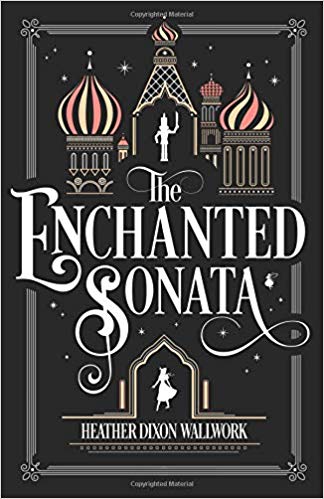
Book Review: The Enchanted Sonata
Guess what? I'm going to be at LTUE this year!
Naturally, I had a lot of other great moments, but I want to keep this short. I had a great time, and I got a blanket to remember the trip by! I also learned that Disney handles its crowds a bit better than Universal Studios, but I still enjoyed going to the Wizarding World of Harry Potter.
And, of course, we had Christmas over the break. We celebrated ours late, which threw off my timing groove for the vacation (New Year's seemed to come too fast). For Christmas, I gave my sister a book, The Enchanted Sonata by Heather Dixon Wallwork. And, after she read it, she magnanimously allowed me to read it next.
I've read this author's books before and really liked them, and this one was no exception. It's a fun, magical Christmas tale, based on the story of the Nutcracker as well as the Pied Piper, with some elements of The Phantom of the Opera and Beauty and the Beast thrown in. The story is about Clara, a talented pianist, who gets wrapped up in this magical world ruled by Prince Nikolai. When a piper with magical music comes and uses his music to turn children into toys, the prince sees a chance to prove himself and also faces danger to himself and his kingdom. He and Clara work together to save his kingdom, each of them growing in the process.
Oh, look. Just read the summary on the Amazon page here.
I don't want to go too into detail on story. You know these fairy tales already, and some of the joy, for me, was in seeing how they intertwined. I found myself wishing this was the Nutcracker story Disney chose to make into a movie instead of the tale they gave us recently. It was charming and Christmassy, keeping the whimsical feel of the ballet while still layering in enough darkness and danger to keep me engaged in the story.
Clara is a likeable, relatable protagonist, and her ability on a piano was described beautifully enough to make me wish the book came with a soundtrack. As for Nikolai, he's a huge dork. And I love him. I should also spare a mention for the Abbey of Indomitable Sisters, but really, you should see them for yourself.
The book does have some glaring grammatical errors, but they're few, and they don't distract too much from the story. As for the story, it's fun. It was the perfect book to read over Christmas break. I won't call it the deepest literature, but it was still enough to get my ankles wet, and it was like reading candy, or a magic spell. Which was exactly what I wanted.
(It also inspired me to try a new truffle recipe, so I expect you'll be hearing about that later.)
Final word: I recommend this as a casual read, when you want something enchanting. The title is not false advertising.
And here's the book trailer, for your enjoyment.
Until next week, and I hope to see you at LTUE this February!
I'm so excited! I'll be on 4 panels: Creating Realistic Friendships (10 am Th), Steps to Stronger Middle Grade Stories (4 pm Th), Writing Different Types of Love (10 am F), and Adventure Stories: How to Write Fun (5 pm F). So come see me if you can! Or just come; it's a good conference and I'm so thrilled and honored to be part of it this year.
Well, beyond that, it's been an eventful holiday for me. My family went to Disney World over Christmas, and it was a good time. Busy, both in terms of schedule and in terms of the sheer number of people in the parks (they capped Magic Kingdom by 11 am on Christmas Eve, but we were already inside), but very good.
Highlights include getting stuck on Rockin' Roller Coaster and seeing the ride with the lights on, the light show on the Tower of Terror on Christmas, the Pandora: Flight of Passage ride at Animal Kingdom (an immersive ride that I thought was worth the 2 1/2 hours we waited for it) and the cookie stroll at Epcot. And me being (still) the only member of my family that can stomach the orange mission on Mission: Space.
THE IRON STOMACH CANNOT BE DEFEATED!
Naturally, I had a lot of other great moments, but I want to keep this short. I had a great time, and I got a blanket to remember the trip by! I also learned that Disney handles its crowds a bit better than Universal Studios, but I still enjoyed going to the Wizarding World of Harry Potter.
And, of course, we had Christmas over the break. We celebrated ours late, which threw off my timing groove for the vacation (New Year's seemed to come too fast). For Christmas, I gave my sister a book, The Enchanted Sonata by Heather Dixon Wallwork. And, after she read it, she magnanimously allowed me to read it next.
I've read this author's books before and really liked them, and this one was no exception. It's a fun, magical Christmas tale, based on the story of the Nutcracker as well as the Pied Piper, with some elements of The Phantom of the Opera and Beauty and the Beast thrown in. The story is about Clara, a talented pianist, who gets wrapped up in this magical world ruled by Prince Nikolai. When a piper with magical music comes and uses his music to turn children into toys, the prince sees a chance to prove himself and also faces danger to himself and his kingdom. He and Clara work together to save his kingdom, each of them growing in the process.
Oh, look. Just read the summary on the Amazon page here.
I don't want to go too into detail on story. You know these fairy tales already, and some of the joy, for me, was in seeing how they intertwined. I found myself wishing this was the Nutcracker story Disney chose to make into a movie instead of the tale they gave us recently. It was charming and Christmassy, keeping the whimsical feel of the ballet while still layering in enough darkness and danger to keep me engaged in the story.
Clara is a likeable, relatable protagonist, and her ability on a piano was described beautifully enough to make me wish the book came with a soundtrack. As for Nikolai, he's a huge dork. And I love him. I should also spare a mention for the Abbey of Indomitable Sisters, but really, you should see them for yourself.
The book does have some glaring grammatical errors, but they're few, and they don't distract too much from the story. As for the story, it's fun. It was the perfect book to read over Christmas break. I won't call it the deepest literature, but it was still enough to get my ankles wet, and it was like reading candy, or a magic spell. Which was exactly what I wanted.
(It also inspired me to try a new truffle recipe, so I expect you'll be hearing about that later.)
Final word: I recommend this as a casual read, when you want something enchanting. The title is not false advertising.
And here's the book trailer, for your enjoyment.
Until next week, and I hope to see you at LTUE this February!
Subscribe to:
Posts (Atom)