I hope you all had a happy and safe Thanksgiving, and did not eat the bad Romaine lettuce.
(I am amused every time a vegetable is recalled due to food poisoning. If you're looking for an example of irony, this is it.)
Also, happy Cyber Monday! If you're looking for a good Christmas gift, may I suggest Under Locker and Key and Arts and Thefts?
I don't know, I think they're pretty good. Great for kids who like heist stories, that's for sure!
Anyway, over the break I saw the new Fantastic Beasts movie, and I also got thinking more about heist movies after posting last week. This post is somewhat inspired by both, though not in the way you may think.
Here's my writing lesson for today:
Just because no one saw a twist coming does not mean it's good.
Just because no one saw a twist coming DOES NOT MEAN IT'S GOOD.
Ahem.
I have to excuse good heist stories and even Fantastic Beasts: The Crimes of Grindelvald from this. They actually handle their twists well. (As for my thoughts on the Grindelvald twist, it was foreshadowed well. I just didn't like it. No more now, since it's too early for spoilers, I think.)
No, what I'm talking about here is when the writer spectacularly fails to foreshadow the twist, fails to set up for it, and then yanks the rug out from under the readers' feet. And the sad thing is, too many writers and readers think this counts as a good twist.
For example, think of Frozen. How many of you saw the twist that Hans was evil coming, just based on what you saw in the film?
It wasn't set up for. Sure, you got a line about how he had twelve older brothers, but that doesn't immediately spell murderer, especially when you count in his smiles behind Anna's back, his consistency in helping the kingdom in her name, etc. His twist evil is never foreshadowed, and doesn't make a lick of sense.
But because it was a surprise, people think it's a good twist.
NO!
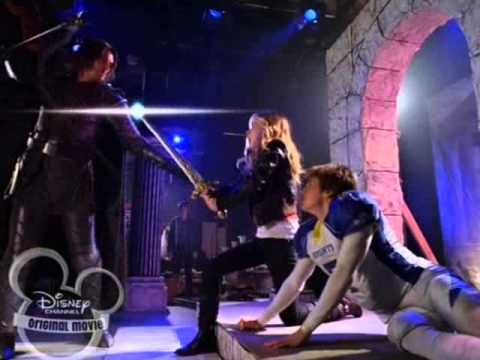
Another one of these was the Disney Channel movie Avalon High. The best part of that movie was the Merlin character. But the main character's identity is revealed at the end...and it wasn't set up for at all. In fact, the foreshadowing straight-up lies, telling viewers something incorrect just to prepare them for the wrong thing.
NO!
I'm sorry, this fires me up. (By the way, read the book Avalon High by Meg Cabot. That one has a good twist ending.)
Because bad twists are such a pale imitation of a good twist. A good twist does not lie to the audience. It does not come out of blazing nowhere. It's there, the whole time, just hiding and waiting. A clever audience could potentially discover it.
But they don't, and that's what makes it great. It's one thing to get jumped by a monster that didn't exist until a moment ago. It's another to be stalked the whole time, get jumped, and then understand all the clues that were there but overlooked earlier.
This happens in a great heist story: the heroes are checked and then check-mate their enemy, and we see how they did it. And then, when we rewatch the movie or reread the book, we see the preparations happening. We see how the "out-of-character" moments were part of the plan, or how everything came together. And we applaud it.
Because good twists are not easy. That's why so many rug-pulling bad ones exist. It's a difficult balance to present enough clues to the readers but not give the whole game away.
So, how to do it? Keep it natural. If a character would know something, don't suddenly start hiding their thoughts from the reader. That's lying. But it would be more natural to have that character focus on the present moment, all the problems and solutions happening now. Or, move to another character's head. Show it third-person. Movies do this well; it's harder in books. But possible.
Also, don't hide telling details without reason. In The Prestige, you see Christian Bale's character's fingers bleeding again, and you get no explanation. Until the end. But that clue was there the whole time. It would have been lying to keep it out. Kept in, a clever viewer might have caught on. The movie didn't make a big deal out of it; it was used to show character conflict. But it was there.
On that note, using clues in ways that make sense in other ways can help keep them subtle. Readers might expect a scene or detail to further character development, or show the political climate of the day. So when it is revealed to have another, hidden purpose in showing the possible ending, it's more surprising.
Or at the very least, just don't lie. Don't hide it. In Spider-Man: Homecoming, we learn Lisa's dad is the Vulture. That was not foreshadowed, but it wasn't hidden, either. We know Vulture has a kid, and we know Lisa has a dad. But there's no reason to see them together (Lisa's parents aren't home during her party, and Vulture keeps his work separate from his home life) until Peter shows up for Homecoming. This twist feels natural because it makes sense in the story, and the writers didn't deliberately force characters and plots to hide the twist until later.
Don't force a twist just because that's what the cool kids do these days. Like any part of a story, a twist should feel natural and inevitable. We just missed it growing this whole time. A good twist is a magic trick: we want to be fooled in a flashy and fun way.
But no one likes being lied to.
Monday, November 26, 2018
Monday, November 19, 2018
Heist Stories!
I'M BAAAAACK!
Two weeks of time off, and it's over. In all fairness, I could have come back and blogged last Monday, but I got hit hard with a bad cold, and last Monday it had a thriving business in my chest and throat and was opening a franchise in my nose, so all I wanted to do was sleep it off. Now, a week later, my voice is (mostly) back and so is my motivation.
Like I said, it was bad.
The social media fast was good. I learned that I can be super-productive when I'm not on social media, and I also learned that while Twitter, Instagram, Pinterest, and other social media sites let you turn off notifications to your phone, Facebook not only doesn't allow you to fully turn them off, but also totally ignores your input on the ones you DID turn off.
Darn it, Facebook.
Anyway, today I want to talk about heist stories.
I don't think it's any surprise to you that I
Love
Heist stories.
On a related note, I saw Solo over the social media fast (the new Star Wars movie) and I really liked it. I was hoping for thieves in space, which was exactly what I got. It was fun and exciting and a blast to watch. I don't know why it did so badly in theaters.
I was talking about this with a friend and she said she actually liked Solo better than Ocean's 8, another heist movie. I asked why, and she said Ocean's 8 was too straight-forward. There wasn't a moment when the heroes seemed to have lost, like in Ocean's 11 or in many, many episodes of Leverage.
That got me thinking about heist stories and what we love about them. Sure, there's the element of the "bad boy" hero - the thief that we're supposed to root for, and that's a fun twist. But if that were all, then we'd be okay with something like Ocean's 8 or a simple back robbery story. We'd see thieves winning, and that would be enough.
But it's not.
There's something about a heist story that makes it different than a subverted hero trope, or even an action/adventure story. I've been thinking about it, and this is what I have decided.
The most important part of a good heist story is two powerful minds at war with each other.
It's a game of freaking chess, but with laser grids and motion sensors. And oddly enough, considering how many people might not care to watch a game of chess, that mental game is the draw.
Heist stories are all about outsmarting each other. We're not happy, as an audience, unless we see someone win through brains and planning, not by getting off a cheap escape or by pulling a gun. (By the way, I often see pulling a gun as proof that the gun-toter has lost the game.)
Player 1 has something valuable. So, Player 1 sets up the best protection they can to protect this valuable thing. No matter when the story takes place, this is always true. This can be walls, devices, guards, bribery, etc. The stronger the fortifications, the more hopeless the task to steal this, the better.
Player 2 (or "players" 2, in the case of a team) wants to get the thing, but they plan to do it in a sneaky, clever way. They have to think past all the protective walls and guards and policies to get what they want. We sit and watch them work against impossible odds, wondering how they'll do it.
But Player 1 didn't just vanish after the first play. Oh, no. They're still there, ready to counter any move they see Player 2 making. And in the best stories, they do. And Player 2 counters, and plans.
In my opinion, the best heist stories are the ones you can't see the end of. You don't know who is going to win: the mark or the thief. Even though you know who the heroes are, you don't know if they'll actually pull this off and get away with it. Even better, at the end, you actually think they lost.
But then they pull off one last sleight of hand, one last plan that proves that they were the smartest player after all. It doesn't come down to a car chase or shoot-off; it comes down to that last chessboard play when the thief knocks down the king for good, and there's nothing Player 1 can do about it.
(On a related note, I saw a stage production of The Scarlet Pimpernel this weekend as well; that's one heck of a great heist story, if set in Revolutionary France and with a very heroic "thief.")
We like the puzzle and cleverness of a heist story. We want to see how the thieves will outwit the mark. They can't just win; they have to win with style. And when that happens, and we were duped and surprised just like the mark, by the people we've been rooting for the whole story, we are delighted by it. A heist story isn't just a robbery; it's checkmate.
And it's so, so satisfying.
Two weeks of time off, and it's over. In all fairness, I could have come back and blogged last Monday, but I got hit hard with a bad cold, and last Monday it had a thriving business in my chest and throat and was opening a franchise in my nose, so all I wanted to do was sleep it off. Now, a week later, my voice is (mostly) back and so is my motivation.
Like I said, it was bad.
The social media fast was good. I learned that I can be super-productive when I'm not on social media, and I also learned that while Twitter, Instagram, Pinterest, and other social media sites let you turn off notifications to your phone, Facebook not only doesn't allow you to fully turn them off, but also totally ignores your input on the ones you DID turn off.
Darn it, Facebook.
Anyway, today I want to talk about heist stories.
I don't think it's any surprise to you that I
Love
Heist stories.
I was talking about this with a friend and she said she actually liked Solo better than Ocean's 8, another heist movie. I asked why, and she said Ocean's 8 was too straight-forward. There wasn't a moment when the heroes seemed to have lost, like in Ocean's 11 or in many, many episodes of Leverage.
That got me thinking about heist stories and what we love about them. Sure, there's the element of the "bad boy" hero - the thief that we're supposed to root for, and that's a fun twist. But if that were all, then we'd be okay with something like Ocean's 8 or a simple back robbery story. We'd see thieves winning, and that would be enough.
But it's not.
There's something about a heist story that makes it different than a subverted hero trope, or even an action/adventure story. I've been thinking about it, and this is what I have decided.
The most important part of a good heist story is two powerful minds at war with each other.
It's a game of freaking chess, but with laser grids and motion sensors. And oddly enough, considering how many people might not care to watch a game of chess, that mental game is the draw.
Heist stories are all about outsmarting each other. We're not happy, as an audience, unless we see someone win through brains and planning, not by getting off a cheap escape or by pulling a gun. (By the way, I often see pulling a gun as proof that the gun-toter has lost the game.)
Player 1 has something valuable. So, Player 1 sets up the best protection they can to protect this valuable thing. No matter when the story takes place, this is always true. This can be walls, devices, guards, bribery, etc. The stronger the fortifications, the more hopeless the task to steal this, the better.
Player 2 (or "players" 2, in the case of a team) wants to get the thing, but they plan to do it in a sneaky, clever way. They have to think past all the protective walls and guards and policies to get what they want. We sit and watch them work against impossible odds, wondering how they'll do it.
But Player 1 didn't just vanish after the first play. Oh, no. They're still there, ready to counter any move they see Player 2 making. And in the best stories, they do. And Player 2 counters, and plans.
In my opinion, the best heist stories are the ones you can't see the end of. You don't know who is going to win: the mark or the thief. Even though you know who the heroes are, you don't know if they'll actually pull this off and get away with it. Even better, at the end, you actually think they lost.
But then they pull off one last sleight of hand, one last plan that proves that they were the smartest player after all. It doesn't come down to a car chase or shoot-off; it comes down to that last chessboard play when the thief knocks down the king for good, and there's nothing Player 1 can do about it.
(On a related note, I saw a stage production of The Scarlet Pimpernel this weekend as well; that's one heck of a great heist story, if set in Revolutionary France and with a very heroic "thief.")
We like the puzzle and cleverness of a heist story. We want to see how the thieves will outwit the mark. They can't just win; they have to win with style. And when that happens, and we were duped and surprised just like the mark, by the people we've been rooting for the whole story, we are delighted by it. A heist story isn't just a robbery; it's checkmate.
And it's so, so satisfying.
Monday, October 29, 2018
The Modern Monster
Hey! So, Halloween approaches, and you know what that means.
I did the Haunted Half in Provo again!
And my sister did it with me this year!
It was a beautiful day for her first half, and she did well! It was fun watching her cross the finish line. I hope she had a good time.
As for me, I did pretty well. I got 11th in my age/gender division. This is dangerous, because now I'm wondering if I should continue the speed training in hopes of getting a little closer to the podium on my next race.
I shouldn't think this way.
In other news, I'm about to take a 10 day social media fast under counsel from my church leaders, which will start on the first day of November. I think this will be good for me, and help me re-prioritize my life (not to mention avoiding social media during the election), but that means that I won't be blogging for the next two Mondays. I promise to come up with some good posts for you when I come back. Maybe, with all my free time not on Pinterest and Facebook, I'll even write a short story for you!
Today, though, I want to finish out October and my discussion on monsters and monster stories by talking about what makes monsters so compelling. I don't mean in general; I mean specifically.
On Friday I watched the old 1931 Frankenstein with Boris Karloff. As I've said before on this blog, Frankenstein is interesting because it's a situation where someone, Mary Shelley, created a new monster that somehow resonated enough to become part of the witches/ghosts/vampires/werewolves canon.
This is rare and not easy. I'm trying to think of any other stories that have done so well at establishing a whole new class of monsters. Even zombies and robots don't seem to come close, or at least seem like a subclass of Frankenstein's monster.
So what did Shelley do? What can we learn from this, and how can we as writers try to create monsters that, even if they don't last as long as Frankenstein's monster, resonate and chill readers?
Well, I'm no expert in writing horror, but here are the thoughts that I had: good monsters, good horror, is both familiar, and other.
Let me explain what I mean. I'm going to start with Other. Monsters are Other. There's something about them that is horribly out of place in our nice, neat, orderly lives. Dracula is a blood-drinking living corpse. Ghosts don't move on like dead people are supposed to. Skeletons aren't supposed to be able to move on their own. Something is wrong.
With Frankenstein, the monster is a combination of dead people that has been reanimated. This is Other. It flies in the face of all reason. The dead can't come back to life as a new being. The Other in monsters also seems to be very connected to ideas of life and death (mostly death). Something has gone wrong with the way things are supposed to go, and we hate it.
But monsters are also familiar. Dracula is a man, in form, and he's charming and hospitable. He represents something we know and like, but twisted. He also represents ideas that we understand: hunger, lust, longing. There are real, familiar fears wrapped up in him: death, of course, but also fear of becoming something you don't want to be, or being a victim and then perpetuating the cycle of victimization.
Frankenstein's monster is also familiar in some ways, though I would claim Victor has more of the familiar in him, and that's what makes him so horrifying. The scientist who burns for knowledge enough to seek forbidden areas, who is horrified by his creation and rejects responsibility. Sometimes I think the real fear in Frankenstein is the fear of consequences, which is something we all face.
The best horror I've read is about us: it's about human desires, fears, and understanding, and the monsters come when those things are perverted and turned Other. They're everything we hate and never want to be, but at the same time, everything horrible we see in ourselves.
So, how can we use this? Well, if you're going to create a monster, what material are you going to work with? What human fears or desires will you play off of? What twists your heart to think about, for good or bad? Now, how can you make it dark? How can you take the good desires and make them harmful, or the bad ones and give them power?
And, finally, like Frankenstein and his creation, how can you build this fear a body and bring it to life?
Happy Halloween, and happy writing! I'll see you in a couple of weeks.
Monday, October 22, 2018
Jonathan Harker Appreciation Post
Well, the Haunted Half is this weekend, so wish me luck! My goal is to run it in under 2 hours, again, so let's hope I can do that.
It's coming close to Halloween, so I'm continuing my discussion of monsters and horror stories, and today, I feel the need to defend a lesser-liked horror novel character:
Jonathan Harker from Dracula.
Today's discussion stems from my intense, burning anger at too many writers rewriting Dracula so that Mina gets with the monster that attacks and controls her, leaving her husband Jonathan or at least being unfaithful to him for a while. Jonathan, in this way, has to be portrayed as weak or controlling or foolish or all three.
I loathe this. I will spout off in fountains of bubbling rage whenever someone starts talking to me about this.
Why? Because it contradicts everything said in the book, and it's not as progressive as its sold.
Okay, first, I've said it before, and I'll say it again: What Dracula does to Mina and Lucy is NOT romantic or strong. It's an assault of the most basic nature, controlling the women's bodies and minds, and forcing them to become something they never wanted to be.
It is parasitism. It is lust.
It is NOT love. It is NOT liberating. It is everything that our modern #MeToo movement is against, so please, please, PLEASE stop romanticizing it.
Or yes, rewrite it so there seems to be something there and then Mina stakes her attacker in the heart! A-ha!
I do understand, in part, where the attraction to this kind of rewriting comes from. Mina is a strong, interesting character, and we want the best for her. We don't want her to be trapped in a situation where she can't be all she could. Which is why I think we get concerns like this:
"But Mina is such an intelligent, strong character! She deserves to be with someone who's also smart and strong, not that weak, pathetic Jonathan, who controls her and prevents her from helping with the fight."
Um, okay. First, yes, Jonathan and the other men do block Mina out. But I'd like to point out that it's a group decision, not just Jonathan's, and Stoker makes it pretty clear this is a bad idea when Mina starts to be fed on by Dracula. After that, Mina decides to stay away because she's aware that if she can read Dracula's mind, he can read hers, and if she knows the plans, well....
So second, Dracula is the controlling one. When Mina is under his command, she is prevented from acting and even speaking during the hours Dracula has full power. But during sunrise or sunset, she gets her power back and uses it to fight against the vampire. The group of men, in this case, listen to her and use what she offers them without dismissing her aid.
Dracula is the attacker, the abuser. Not the human men, and not Jonathan, though I admit that mistakes were made regarding Mina.
Which brings me to "third": I don't agree that Jonathan is a weak character. Maybe not as strong or dynamic as Mina or Van Helsing, but not weak. Please consider the following:
- Jonathan was the first character we meet in the book, so his voice establishes our first glimpse of the novel.
- He lived with vampires for days and days, slowly understanding how trapped he was.
- He makes an escape from Castle Dracula, and we don't know what happened or how difficult/terrifying that might have been, though we know he suffered a mental breakdown as a result. (This is often used as proof that Jonathan is weak, but again, we don't get the escape story, and frankly, there are much worse reasons for a breakdown than "trapped by and preyed upon by the actual living dead.")
- Dude saw female vampires eating a baby (or preparing to). And Dracula climbing the walls like a lizard. If anyone has first-hand experience with the awfulness of what vampires are, it's him.
- Upon returning to England and finding out Dracula is there, Jonathan is still willing to fight.
- He uses his clerical know-how to track and destroy Dracula's safe havens.
- After Mina is cursed, and he's been through so much trauma that his hair has actually turned gray, he's still in the fight. He doesn't shrink or run. In fact, he apparently hates Dracula and wants to destroy him, even if it cost his own soul to do so.
- Also, when Mina is cursed and asks the men to kill her if she turns into a vampire, Jonathan, the man who has seen vampirism up close and personal in ways even Van Helsing has not, decides that if Mina turns, he'd become a vampire too, for her.
- He's the one who decapitates Dracula, in the end. One of two men to get a hit on the vampire, and the only one to survive doing so.
All in all, I think we don't portray Jonathan Harker the way he was written. From what I see here, I see a man who is kind and loving to his wife, a sensitive man who is hit hard by the trauma around him. But this is not weakness.
Jonathan does not flee the fight, but stays and gives what he can to help. And, when his own wife is hit, fights all the harder. I think he loves Mina more than life, as evidenced by his desire to join her as a vampire if it comes to that.
This man is a cinnamon roll, a sweet person who has been through some crap and is done with it. He's not a weak, shrinking character who has nervous breakdowns on every page (I'm looking at you, Victor Frankenstein). He takes action to defend what he loves.
I think that's a decently strong character, and I also want to remind you that Mina is smart and strong. If this is true, can we then believe that she's smart and strong enough to choose a good man? One who is loving and sensitive and willing to be there for her, no matter what? Maybe there are different kinds of strength, and maybe Stoker was a good enough writer to show different people, all strong, but in different ways.
I, for one, am fond of the cinnamon rolls. I'd love to see this relationship explored more in the retellings, and I wish I'd seen more good interpretations in the past.
Monday, October 15, 2018
Monstrous Monsters
Big news! My friend Madeleine Dresden just got picked for #PitchWars!
YAY!
Okay, time to vent.
Last week, I talked about how the race/monster analogy makes me uncomfortable most of the time because it equates a human race to something that literally can harm people, and thus has a realistic basis in fear.
But I also hinted at one of my big pet peeves about monster movies that do this: the monster doesn't act like a freaking monster.
We have zombies that aren't dead and don't eat brains! Vampires who walk around in sunlight and give lip-service to cravings without it ever really being a problem! Come. The freak. On.
I understand why this happens in these race analogy movies: it's because the metaphor breaks down immediately if the creatures in question are scary.
Instead, of, you know, breaking down when you sit and think about it.
I also realize this isn't really a problem in writing, not like the metaphor can be. This is a matter of personal taste. I just really want monster stories where the monsters are monsters. Is that too much to ask?
Maybe this is a backlash against the angsty teen paranormal romance books where vampires are barely vampires. Maybe it's just Halloween and I want to be spooked. Maybe it's because I just read yet another Dracula retelling where Mina falls for the freaking rapey vampire!
(Stop doing that, please. Just...read the original book and see for yourself how not a gentleman, how not liberating Dracula actually is.)
So here I am, complaining. Whining, even. I'll admit that. But part of me wonders why bother using monsters as characters at all if they aren't going to be a threat. If they're not going to be other, and scary. That's the whole point, right? (See problematic race metaphor discussion.)
If you have zombies, but they don't eat people and aren't actually dead, why even have zombies? Why not just have people? If vampires don't drink blood, why not replace them with broody teenagers? It would be way less creepy that having century-old men lusting after teenage girls.
Besides, I like the pull of having creatures that may seem eloquent and charming (vampires, not zombies) but are actually serial killers. Evil can be quite beautiful, and as much as we need stories about accepting people who are different, I think we need stories about rejecting people who seem like us, but are cruel and sadistic and use people for pleasure.
I also like the idea of people having to chop down zombies who were once loved ones. How do you respond when the person hurting you is someone who was once loving to you, and who you still love back? There are stories here, with real human emotions, when the dark side of monsters is restored.
There's a place for the nice monsters. But please, let's not forget the dark side and the power that those stories have. The dark monsters: Frankenstein, Dracula, werewolves, witches, ghosts, etc. They came first, and they will be around long after the nice monsters' time has passed.
Maybe there's a reason for that.
In other news, yes, my YouTube channel seems abandoned. I have been very busy, and I wanted to make sure that I give it sufficient time and energy. So, yeah, it's coming back. Just give me some time to catch my breath.
Monday, October 8, 2018
The Problem with Monster/Race Metaphors
Folks, the writing is going well. I'm moving forward with my projects and just plugging along. Not much to report right now, but I'll let you know if that changes.
So, this last week I discovered that Disney Channel's website has a bunch of their old Halloween movies up to watch for free, like the Halloweentown movies, Mom's Got a Date with a Vampire, Scream Team, Under Wraps, those things.
They also had a new one called Z-O-M-B-I-E-S. I'd seen this movie on DVD at Target, and it was free to watch, and I was procrastinating fixing a toilet seat (short but boring story), so I decided to watch it.
My review: well, I don't watch Disney Channel original movies expecting the world's best films. Or even great films, for that matter. I watch them because they are nostalgic for me and because sometimes the music and dancing is fun.
That was the case for this movie. The music and dancing were fun, and I enjoyed the numbers. But the writing...not so much.
For one thing, the "zombies" in the movie rarely if ever actually acted like zombies (seriously, can I PLEASE get monsters that actually behave like monsters?), which made me wonder why they even wrote it like this. For another, various Chekov's guns were presented but never fired, and worldbuilding broke down in places.
But the thing that bugged me the most was the race metaphor through the whole movie. The plot revolves around a school being desegregated - aka, allowing zombie students to attend for the first time ever. The zombies leave their ghetto but aren't really accepted. The normal kids are disgusted by the zombies, who can't eat lunch with them, have to study in poor conditions, etc.
Sound familiar yet? It gets worse/better when Zed, the lead zombie character, becomes the star football player. His triumphs on the field lead to more respect for the zombies and better treatment, but only as long as he keeps winning.
There was a heavy-handed race metaphor through the movie, and it bugged me.
I don't mind stories about race. I think they're useful and promote empathy. And if there are kids who are more empathetic as a result of watching this movie, then great. But what annoyed me was the way that this movie, and so many others, draw a parallel between other races and creatures that can actually inherently hurt the protagonists.
In Z-O-M-B-I-E-S, the zombies are pretty tame, but they have and could eat people. The only control on them is a band on their wrist that prevents brain craving, but in a scene where cruel teens turn those bands offline, the zombies start hunting immediately.
The zombies are inherently dangerous, and the humans have a good reason to fear them. So, in the race metaphor, is the movie saying that other races also are inherently dangerous?
See the breakdown? And I see this all over. In X-Men. The mutants really can kill people with their powers in ways humans can't easily defend against. It makes sense that humans are worried that mutants will use those powers to harm them. So what are we supposed to compare them to again?
What about Zootopia? The predators literally have a history of eating prey. They have teeth and claws. They are inherently dangerous.
But in real life, racism doesn't make logical sense. It isn't based in any inherent danger. It's skin color and hair color. It's physical features that have no inherent danger, or it's cultural norms that are odd to another culture.
It's "I don't like that guy because of his skin color" or "I feel weird around her because her food smells strange." There's NO inherent fear of being eaten or set on fire with someone's mutant powers.
This is why I don't like this kind of metaphor. It's flawed. It doesn't reveal racism for what it really is, and could extend the metaphor to places that it doesn't belong.
So how do we fix this in our own writing? The race/monster metaphor is so ingrained that what do we do?
Well, one way would be to make the difference something cosmetic or at least not inherently dangerous. This alien race has tiny octopi for hands, or they worship a black hole (but don't sacrifice to it), or something. Something more in line with the way real racism works.
Or, if you use the monster metaphor, to show who over-the-top it really is. If these characters can accept the monsters with all this inherent threat, then why can't we accept people who are different when there is no inherent threat?
I don't think people who write these metaphors into stories are malicious in any way, but I think we can do better, and I hope we do. It will make better stories, and it will perhaps move race discussions into a more realistic light.
Monday, October 1, 2018
Two Hundred Years of Frankenstein
It's October, and this year also marks the 200th anniversary of the publication of Frankenstein.
So that's what we're talking about.
Frankenstein is kind of a remarkable book in a lot of ways. For one thing, it was written by a teenage girl, Mary Shelley. She was 18 when she first started writing Frankenstein; or, The Modern Prometheus. Dang, that's young!
Frankenstein is also considered to be the first work of science fiction. This novel has a monster created not by magic or pulled from folklore, but made by science, using scientific methods. It includes scientific ideas popular at the time of writing, such as galvanism, working them into the story, and also addresses moral and ethical questions of science, like, is it okay to create life and then abandon it?
(This question is why I don't care for Victor Frankenstein very much.)
The book is also interesting because Mary Shelley created a monster, just like Victor Frankenstein did. This wasn't a creature from folklore: it wasn't a ghost, or vampire, or werewolf, or witch, or any other undead or magical threat. And yet we still include Frankenstein's monster in that list when we name traditional Halloween monsters/costumes.
Frankenstein's monster, and the title character "mad scientist" himself, have been added to the monster pantheon, and it's all because of this book. It has had such an impact on the world and on horror and science fiction as genres, so it deserves credit.
If you haven't read it, I recommend doing so. It's not very long and it's worth it.
Anyway, for the rest of this post I'm going to share some of my favorite pictures and links about Frankenstein, so feel free to enjoy it.
- This Overly Sarcastic Production video on Frankenstein. It's clever and summarizes the story rather well.
There are also a bunch of puns and jokes online, but I'm not including them here because most of them only tangentially relate to the book. You can also go on YouTube for other summaries and audio book versions of the novel, if you want.
So that's what we're talking about.
Frankenstein is kind of a remarkable book in a lot of ways. For one thing, it was written by a teenage girl, Mary Shelley. She was 18 when she first started writing Frankenstein; or, The Modern Prometheus. Dang, that's young!
Frankenstein is also considered to be the first work of science fiction. This novel has a monster created not by magic or pulled from folklore, but made by science, using scientific methods. It includes scientific ideas popular at the time of writing, such as galvanism, working them into the story, and also addresses moral and ethical questions of science, like, is it okay to create life and then abandon it?
(This question is why I don't care for Victor Frankenstein very much.)
The book is also interesting because Mary Shelley created a monster, just like Victor Frankenstein did. This wasn't a creature from folklore: it wasn't a ghost, or vampire, or werewolf, or witch, or any other undead or magical threat. And yet we still include Frankenstein's monster in that list when we name traditional Halloween monsters/costumes.
Frankenstein's monster, and the title character "mad scientist" himself, have been added to the monster pantheon, and it's all because of this book. It has had such an impact on the world and on horror and science fiction as genres, so it deserves credit.
If you haven't read it, I recommend doing so. It's not very long and it's worth it.
Anyway, for the rest of this post I'm going to share some of my favorite pictures and links about Frankenstein, so feel free to enjoy it.
- This Overly Sarcastic Production video on Frankenstein. It's clever and summarizes the story rather well.
And on that note:
There are also a bunch of puns and jokes online, but I'm not including them here because most of them only tangentially relate to the book. You can also go on YouTube for other summaries and audio book versions of the novel, if you want.
Subscribe to:
Posts (Atom)